


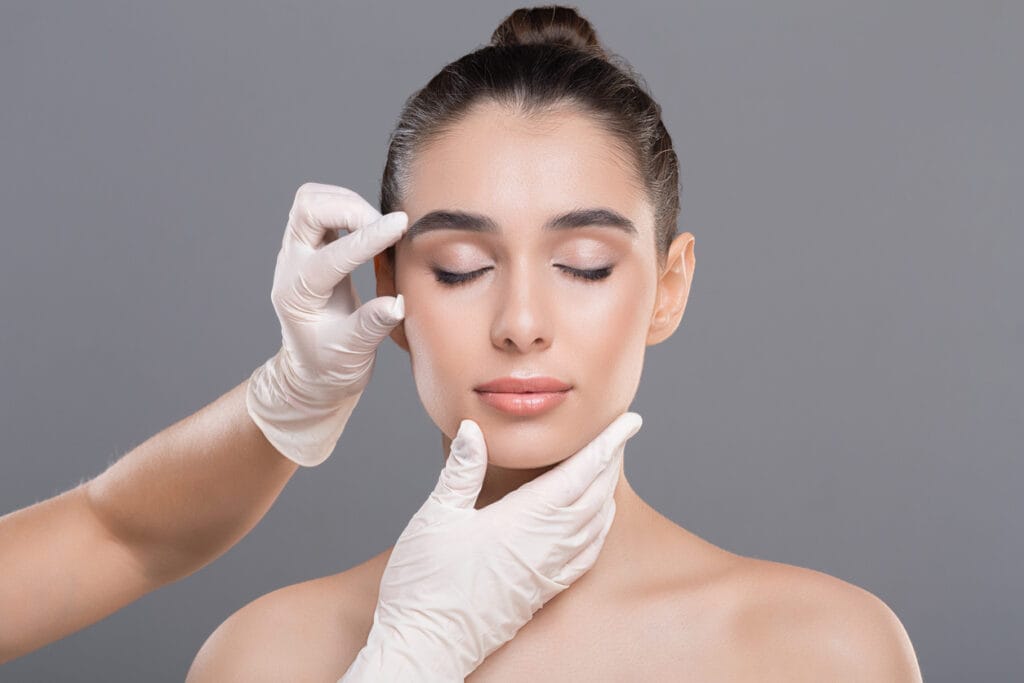
Recent years have witnessed a growing interest in aesthetic medicine among young people, a phenomenon that reflects profound cultural, psychological and social changes. In Italy and the United States, the number of adolescents and young adults resorting to non-surgical aesthetic procedures has increased significantly, in parallel with the rise of social media as a means of constructing visual and social identity. The “image culture” has made appearance a key element of self-perception, with implications for psychological well-being and the dynamics of social acceptance.
Aesthetics have always had a symbolic value, but in the digital age they have taken on an unprecedented centrality. Generation Z and the young Millennials live in a context dominated by continuous self-exposure through digital images, where the face and the body become tools of social communication.
A study by the American Academy of Facial Plastic and Reconstructive Surgery (AAFPRS, 2024) notes that 78% of US cosmetic surgeons have experienced an increase in requests from patients under 30, with an increase of 16% compared to 2023. In Italy, according to data from AITEB (Italian Association of Aesthetic Botulinum Therapy, 2024), more than 30% of requests for minimally invasive treatments come from individuals under 35.
This trend reflects a cultural transformation: beauty is no longer perceived as a natural attribute, but as a personal project. Aesthetic medicine thus becomes a means of identity construction, empowerment and sometimes conformity.
The role of social media is crucial in shaping the contemporary aesthetic ideal. Platforms such as Instagram, TikTok and Snapchat encourage the spread of filters, digital retouching and aspirational content, contributing to the formation of uniform aesthetic standards that are difficult to achieve.
Recent research (Perloff, 2024; Fardouly & Vartanian, 2024) shows that daily exposure to idealised images on social media can generate body dissatisfaction, low self-esteem and compensatory behaviour such as the use of early beauty treatments.
In particular, the phenomenon of “filter dysmorphia” describes the tendency of many young people to desire to resemble the modified image of themselves created through digital filters. The boundary between virtual and real thus becomes blurred, and aesthetic medicine is perceived as a legitimate means of bridging this gap.
The motivations driving young people towards aesthetic medicine are complex and multi-layered. According to a study in the International Journal of Cosmetic Dermatology (2025), the main factors are:
the desire to improve self-esteem (62%),
the perception of increased social competitiveness (47%),
the influence of social models and influencers (39%).
Adolescence and early adulthood are phases of identity vulnerability, in which the body becomes an instrument of expression and control. Aesthetic medicine, especially in its less invasive forms (such as fillers, botulinum toxin or biostimulation), offers a perceived “safe” and reversible response to these needs. However, several studies (Cash & Smolak, 2023; Tiggemann & Anderberg, 2024) show that the positive psychological effects tend to be temporary, and may leave room for new dissatisfaction or a cycle of repeated interventions.
The global aesthetic medicine market reached an estimated value of $76 billion in 2024, with a projected growth of 12% annually until 2028 (Grand View Research, 2025). In Italy, according to AICPE (Associazione Italiana di Chirurgia Plastica Estetica, 2025), the treatments most requested by young people aged between 18 and 30 are:
1. Lip and cheekbone filler (38%),
2. Preventive botulinum toxin (“baby botox”) (27%),
3. Chemical peels and skinboosters (22%).
The target group has progressively shrunk: more and more under 25s are asking for “soft” interventions with preventive rather than corrective purposes. The offer has adapted by introducing fast, accessible and heavily advertised treatments online, often by influencers and doctors who also act as content creators.
Comparing the Italian and US realities, in the United States, youth cosmetic medicine is a well-established phenomenon that is integrated into pop culture. Celebrities and influencers openly share their aesthetic experiences, helping to normalise such practices.
In Italy, on the other hand, the relationship between young people and aesthetic medicine retains a more ambivalent dimension: on the one hand, demand is growing, while on the other, a certain cultural reticence remains, linked to the idea that changing one's appearance is tantamount to an artifice or a lack of authenticity. However, this barrier is rapidly diminishing, as shown by data from the Italian Observatory of Aesthetic Medicine (2025), according to which 64% of young women and 28% of young men consider it “normal” to have recourse to non-invasive aesthetic treatments.
The expansion of the youth market raises crucial ethical and regulatory issues. Experts emphasise the need for more aesthetic and digital education to provide critical tools to young users.
In Italy, the Italian Society of Aesthetic Medicine (SIME, 2025) proposes to prohibit aesthetic treatments that are not strictly medical to those under the age of 18 and to introduce psychological information courses before any intervention.
In the United States, the FDA has launched awareness campaigns on the risks of misuse of fillers purchased online and the importance of medical certification.
European and American health institutions converge on one point: it is necessary to balance individual freedom and psychophysical protection, ensuring transparency, safety and awareness.
The relationship between youth, aesthetics and aesthetic medicine reflects the transformation of contemporary values: bodily identity becomes an aesthetic project constantly negotiated between the real and the digital.
While aesthetic medicine can be a tool for well-being and self-esteem, it also risks reinforcing homologising models and psychological dependencies on image.
The challenge for the coming years will be to develop an integrated educational approach that promotes aesthetic awareness, body diversity and a healthier relationship between youth, technology and self-perception.
-
Bibliography (APA, 7th ed.)
AAFPRS. (2024). Annual Survey of Facial Plastic Surgery Trends. American Academy of Facial Plastic and Reconstructive Surgery.
AICPE. (2025). Annual report on aesthetic surgery and medicine in Italy 2025. Italian Association of Aesthetic Plastic Surgery.
AITEB. (2024). Youth and botulinum observatory: trends and data 2024.
Cash, T. F., & Smolak, L. (2023). Body image: A handbook of science, practice, and prevention (3rd ed.). Guilford Press.
Fardouly, J., & Vartanian, L. R. (2024). Social media use and body image concerns: A meta-analytic review. Body Image, 48, 102-118.
Grand View Research. (2025). Aesthetic Medicine Market Size, Share & Trends Analysis Report.
International Journal of Cosmetic Dermatology. (2025). Young adults and aesthetic medicine: motivations and psychological outcomes, 64(2), 215-229.
Italian Observatory of Aesthetic Medicine. (2025). Young people and aesthetic medicine: data and perceptions in Italy.
Perloff, R. M. (2024). Social media effects on young women's body image: Theoretical perspectives and research directions. Media Psychology, 27(1), 14-37.
SIME. (2025). Ethical guidelines for juvenile aesthetic medicine. Italian Society of Aesthetic Medicine.
Tiggemann, M., & Anderberg, I. (2024). The selfie paradox revisited: Self-presentation, body satisfaction, and cosmetic procedures. Psychology of Popular Media, 13(1), 23-39.

 Italian
 English

