


RAPID DISPATCH
24/H dispatch
5 in stock
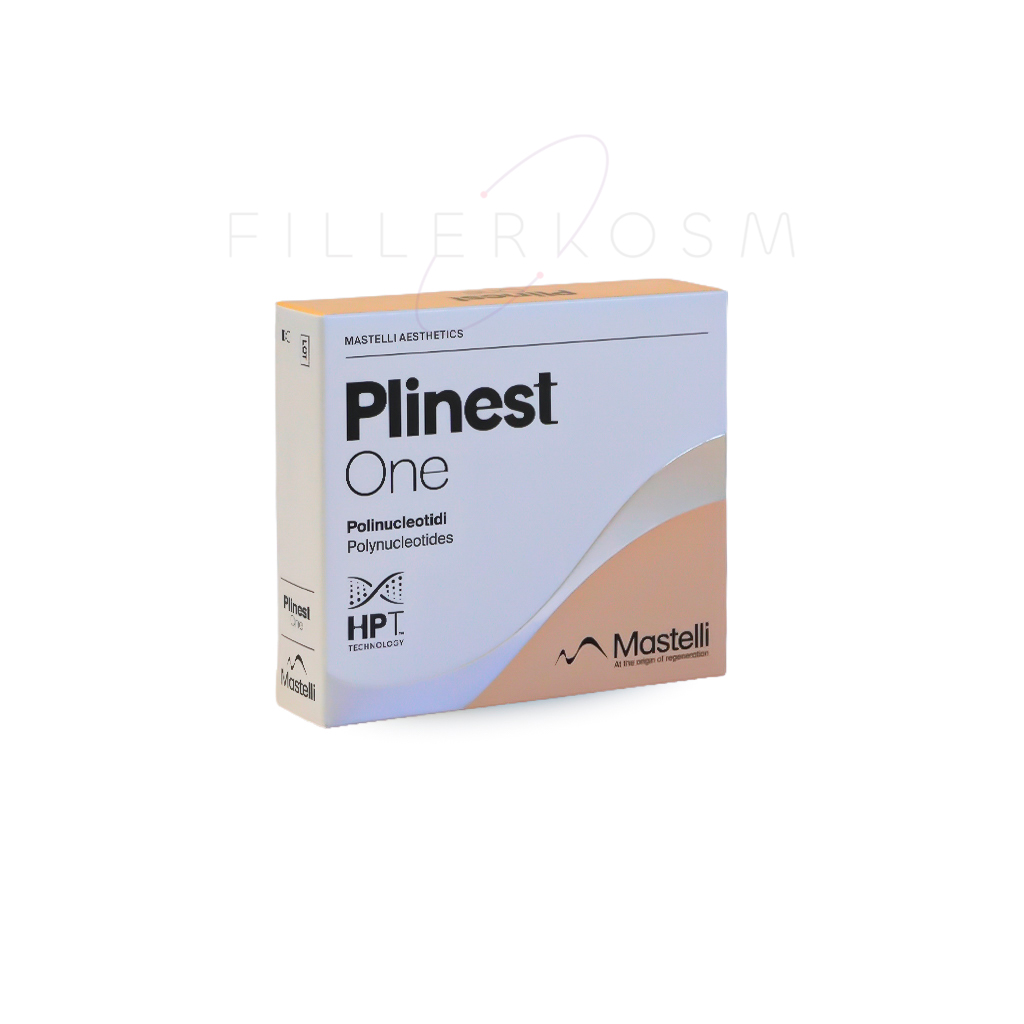
Plinest One is a sterile, apyrogenic, single-use fluid gel for intradermal use, formulated with fish-derived polynucleotides. These polynucleotides possess a marked moisturising and biostimulating action, stimulating fibroblast activity and promoting skin tissue regeneration. Treatment with Plinest One improves the elasticity, firmness and tone of the skin, resulting in a healthier, more even and radiant appearance.
USE MEDICAL STRICT. Medical device. Injection of hyaluronic acid. Use reserved for dermatologists and aesthetic doctors because they require a medical procedure.
Plinest One is a fluid gel:
- Apirogenic, sterile and disposable for intradermal use.
- Fish-derived polynucleotides have a moisturising capacity and a trophic action on fibroblasts.
- Improves skin elasticity and firmness.
- MASTELLI SRL
- NAME: PLINEST ONE
- COMPOSITION: Water, polynucleotides (0.2%), sodium chloride, sodium phosphate, disodium phosphate.
- PRESENTATION: 5 x 4 ml.
- NEEDLE: The size of the needle is chosen by the qualified medical personnel using the product, generally a fine needle (usually 30G) is recommended to minimise patient discomfort.
- INDICATIONS: Used to improve turgidity, elasticity and tone of the skin all over the body.
- INJECTION DEPTH: Injections by the intradermal route. It is possible to use different injection techniques such as linear, microponfi, cross-linked, fan or mixed or non-invasive techniques such as iontophoresis, electroporation, hydroelectrophoresis, etc.
- DURATION: 4 to 6 months.
- USE: Strict medical use.
- Vials: 5 x 4 ml.
- Each package contains 5 glass vials of Plinest One at 4 ml, the package leaflet and ten labels for traceability. The solution contained in the syringe is sterile and pyrogen-free.
It is used to treat large areas of the body, such as the abdomen, buttocks, thighs, arms and décolleté.
Each vial contains 4 ml of isotonic gel consisting of: water, polynucleotides (0.2%), sodium chloride, sodium phosphate, disodium phosphate.
- Before using the product, it is advisable to take a thorough patient history, checking for any previous reactions to intradermal infiltration treatments.
- The normal precautions for intradermal infiltration must be observed: thorough disinfection of the area, avoid use on injured, infected skin or with active dermatitis.
- After the treatment, the treated area should not be exposed to intense sunlight or extreme cold until the papules have completely subsided.
- Possible common local reactions: papules, swelling, erythema, feeling of heat or pain at the injection site; if symptoms persist, seek medical advice.
- The product must be administered by qualified medical personnel according to the correct procedures.
- The simultaneous use of products containing quaternary ammonium salts with Plinest One should be avoided as the hyaluronic acid may precipitate.
Plinest One is contraindicated in the following cases:
- It is contraindicated in individuals with an established hypersensitivity to one of the product's components.
- Plinest One is also contraindicated in the presence of a positive history of allergy to products of fish origin (since polynucleotides are of fish origin).
- It is not suitable for injections at unplanned sites: for example, Plinest One should not be used for other than intradermal routes.
- In pregnant and lactating women and children under the age of 18 there are insufficient clinical data: treatment in these cases is advised against as a matter of caution.
- It should not be injected in the presence of infection or inflammatory processes in the area to be treated.
Trophic and skin-improving action. Indicated for skin laxity, distended strains and atrophic scars.
Yes, the gel is indicated to improve the quality of skin in the presence of skin laxity, stretched stretch marks and atrophic scars by promoting tissue regeneration.
In addition to traditional intradermal injections, microponfi, lattice, fan or mixed techniques can be used, as well as non-invasive methods such as iontophoresis, electroporation and hydroelectrophoresis, always under medical supervision.
The effects generally last four to six months, but may vary depending on the age, skin type and lifestyle of the patient.
Yes, it can be integrated in customised protocols together with fillers, biorevititalising or laser treatments, always assessing the skin condition and under medical supervision.
After the injection, it is recommended to avoid direct exposure to the sun, extreme cold or aggressive treatments until the swelling has completely subsided. Any minor redness, swelling or pimples are normal and temporary.

 Italian Italian
  English